
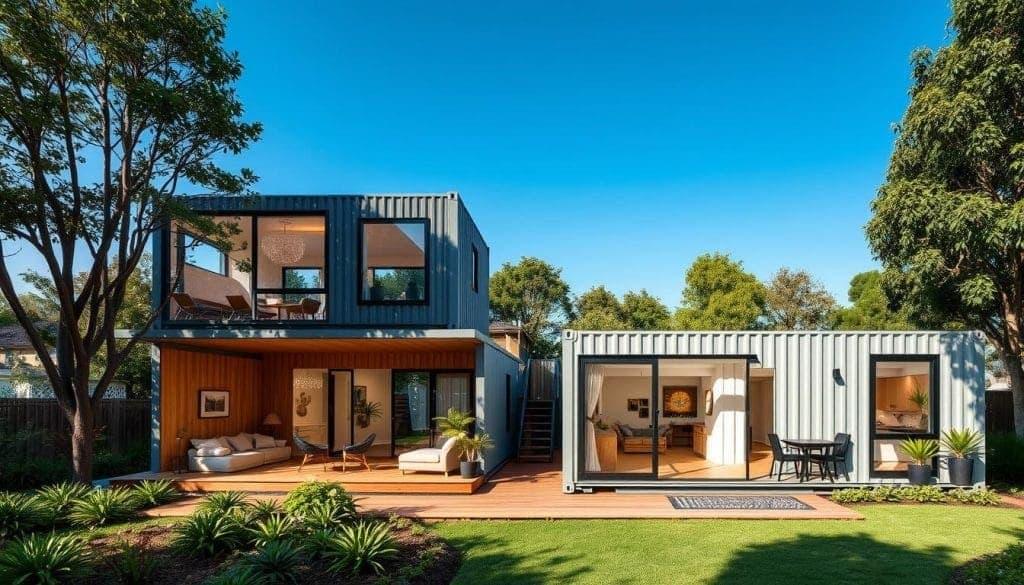
Modular homes are becoming one of the most practical and attractive solutions for modern living. They combine speed, efficiency, and contemporary design in a way that traditional construction often cannot match. Built in controlled factory conditionAre Modular Homes Container Homes? Understanding the Difference
As modular homes continue to gain popularity across the United States, one question comes up again and again:
“Are modular homes just shipping container homes?”
The short answer is no.
While both are examples of off-site construction, modular homes and container homes are fundamentally different in how they are designed, engineered, built, and intended to perform. Understanding these differences can help homeowners make better decisions when choosing the right type of home.
What Is a Modular Home?
A modular home is a building constructed in sections, or modules, inside a controlled manufacturing facility. Each module is engineered specifically to become part of a permanent home that meets local and state building codes.
Once completed, the modules are transported to the building site, placed on a permanent foundation, and securely joined together to form a single structure.
Modern modular homes can look virtually identical to traditionally built homes and can be customized in a wide variety of architectural styles and floor plans.
What Is a Container Home?
A container home starts with a used or new steel shipping container that was originally manufactured to transport cargo across oceans and highways.
To convert a shipping container into a home, builders must cut openings for windows and doors, reinforce structural sections that were removed, add insulation, install utilities, and finish the interior.
Although container homes have become popular for their industrial appearance and unique design, they were never originally engineered to serve as residential buildings.
Built for Different Purposes
The biggest difference between modular homes and container homes is their original purpose.
A modular home is designed from the beginning to be a home.
A shipping container is designed to transport freight.
That distinction influences everything from structural engineering and insulation to room layouts, ceiling heights, and long-term comfort.
Design Flexibility
Modular construction offers nearly unlimited design possibilities.
Homeowners can choose from a wide range of floor plans, exterior finishes, roof styles, and interior layouts. Modules can be combined to create everything from compact cottages to large multi-story residences.
Container homes, on the other hand, are limited by the dimensions of standard shipping containers. Although multiple containers can be combined, the design process often requires significant structural modifications to create larger open spaces.
Energy Efficiency
Energy efficiency is another important consideration.
Modern modular homes are designed with high-performance insulation, energy-efficient windows, advanced wall systems, and carefully engineered building envelopes that help maintain comfortable indoor temperatures year-round.
Shipping containers are constructed from steel, which readily transfers heat and cold. Without extensive insulation and thermal break systems, container homes can become difficult and expensive to heat or cool in many climates.
Comfort Matters
Today’s homeowners expect comfortable living spaces with natural light, generous room sizes, and flexible floor plans.
Modular homes are designed around these expectations. Higher ceilings, larger windows, open living areas, and efficient layouts create bright, comfortable environments that feel spacious and inviting.
Container homes often require creative design solutions to overcome their narrower interior dimensions and structural limitations.
Durability and Long-Term Performance
Both modular homes and shipping containers utilize steel, but they do so in different ways.
Modern modular homes use engineered structural systems specifically designed for residential construction, allowing every component to work together as part of a complete building system.
Container homes rely on structures that were engineered primarily to stack and transport cargo. Once walls are removed or modified, additional reinforcement is often required to restore structural integrity.
Which Is the Better Choice?
There is no single answer for every project.
Container homes can be an interesting option for specialty projects, studios, temporary structures, or unique architectural concepts.
For homeowners seeking a permanent residence, however, modular homes generally provide greater design flexibility, improved energy performance, enhanced comfort, and construction methods specifically engineered for long-term residential use.
The Future of Modern Housing
Off-site construction is transforming the building industry, offering faster construction schedules, improved quality control, and greater efficiency than many traditional methods.
While modular homes and container homes both fall under the umbrella of off-site construction, they are not the same product.
At Nunez Modular, we focus on creating engineered modular homes designed from the ground up for permanent living. Through precision manufacturing, durable construction, and our Natural Modern Design philosophy, we build homes that combine beauty, efficiency, and lasting performance without the limitations of converting shipping containers into living spaces.
Understanding the difference helps homeowners choose a solution that not only fits their budget but also provides the comfort, durability, and quality they expect for years to come.
